When was the last time you took a walk around Queen’s Square and soaked up the history?
In my 40 years living in Cambridge – the last 13 of those years in West Galt – I am now convinced that the square at the west end of the Main Street bridge is the most historic crossroads of the city.
It’s where Galt’s founder, William Dickson, planned the village’s western gateway, welcoming visitors on foot, on horseback in stagecoaches, for community fairs, sports, stage shows, and movies; and political gatherings, church services, and parades, says Andrew Taylor his 1970 local history book, Our Todays and Yesterdays.
Who remembers the Queen’s Hotel, Scott’s Opera House, and the early Galt arena on the Square?
Trains rumbling down the middle of George Street to the big factories along Grand Avenue?
Did you learn to swim at the YMCA pool – or do you splash in the Gore Centennial Fountain on hot summer days?
Do you gather silently on the Square every November, shoulder to shoulder with thousands of your neighbours, for Remembrance Day services around the cenotaph?
They’re all what I’ve learned is part of nearly two centuries of history that Queen’s Square is built on, as described by Jim Quantrell in his chronology book, Time Frames, published in 1993.
Free Walking Tour
Join me on Saturday, September 26, 2026 for a 90-minute walking tour around the square. I’m leading the walk, organized by the Cambridge Public Library.
It’s set to start at 10:30 a.m. at the Queen’s Square branch. There’s no cost, but you must register in advance to join the tour at: https://events.cambridgepl.ca/event/17218602
And bring along your stories about the square to share with your neighbours.
The more I talk with people, the more history I learn about the square.
References
Quantrell, Jim. Time Frames: Historic Chronicles of Galt, Preston, Hespeler and Cambridge (2nd edition) City of Cambridge Archives,1993. Cambridge Public Library call number: 974.344 Qua Catalogue link; https://cambridgepl.bibliocommons.com/v2/record/S207C1117203
Taylor, Andrew. Our Todays and Yesterdays: A History of the Township of North Dumfries and The Village of Ayr, 1970. Published for the North Dumfries and Ayr Centennial Committee. Cambridge Public Library call number: 971.344 Catalogue link: https://cambridgepl.bibliocommons.com/v2/record/S207C1041626
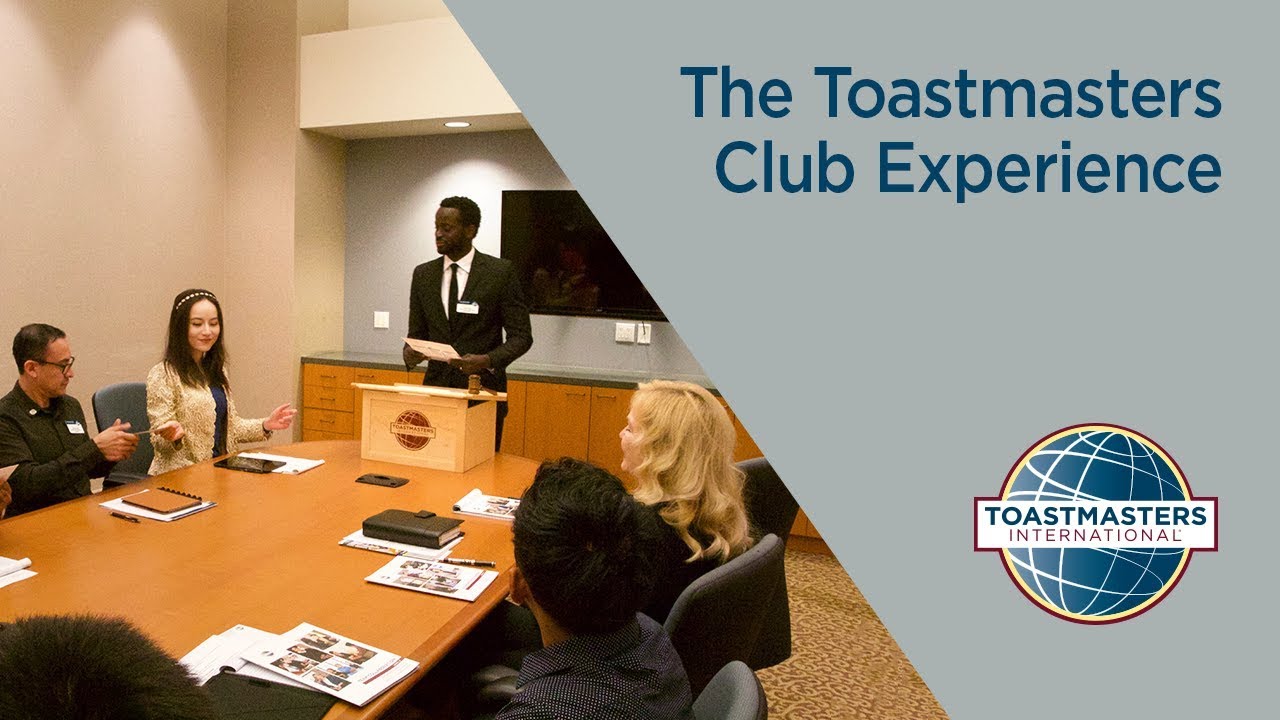
Toastmasters International helps you build personal communications skills businesses value. Photo: Toastmasters International
My experience as a member of Toastmasters International helped me pass a teaching test to successfully earn my first contract as a business communications instructor at Conestoga College in 2020.
In every semester I have instructed since then, in person or online, I mention my membership in the Cambridge Toastmasters Club. I, particular, I suggest my international students investigate Toastmasters to build communication and leadership skills in a new culture.
Toastmasters International was founded in 1924 at YCMA in Santa Clara, California. Today, it has more than 270,000 members, in 150 countries, in more than 14,000 local clubs around the world.
Cambridge Toastmasters was founded 50 years ago and meets Thursdays at 7 p.m. Members range from senior business leaders to entrepreneurs to recent college graduates practicing their communications skills and receiving feedback in a supportive environment.
Toastmasters offers members opportunities to build personal confidence and leadership skills through practicing public speaking. This link shares information about Toastmasters programs.
There’s also a Toastmasters International YouTube channel with self-help videos you can learn from and share at no charge.
If you’re scared of public speaking or worried your communication skills aren’t as strong as you like, I encourage you to visit a Toastmasters Club to see what they offer.
Bring your Saturday night singing voice to a Folk Music Pub Night at Wesley United Church on October 19, 2024.
I’ll be your emcee for the night, as local trio Tea for Three will be joined in concert by two other local folk musicians, Bill Nesbitt and Tom Miller.
Admission is by donation.
Local musicians in the spotlight
Tea For Three consists of Paul Morris, Gwen Potter, and Brad McEwen, who are also members of the band Tethera, which has performed across Ontario and in the UK. The repertoire is traditional folk music, mostly from England, with many tunes from France, Belgium, Scotland, Canada, Scandinavia, and anywhere else as long as they like it and it fits.
Bill loves traditional music of all kinds and plays Anglo Concertina. He also plays for Contra, Morris, and Ceilidh dances throughout southern Ontario. He has a particular interest in songs and tunes from Newfoundland.
Tom has been attending folk clubs, concerts and festivals for more than 50 years, and singing at open stages for over twenty years. He ran the Moonshine Cafe Folk Club and Song Circle in Oakville for 13 years before moving to Cambridge.
“Tom sings unaccompanied – all the songs have choruses – please join in,” Brad says.
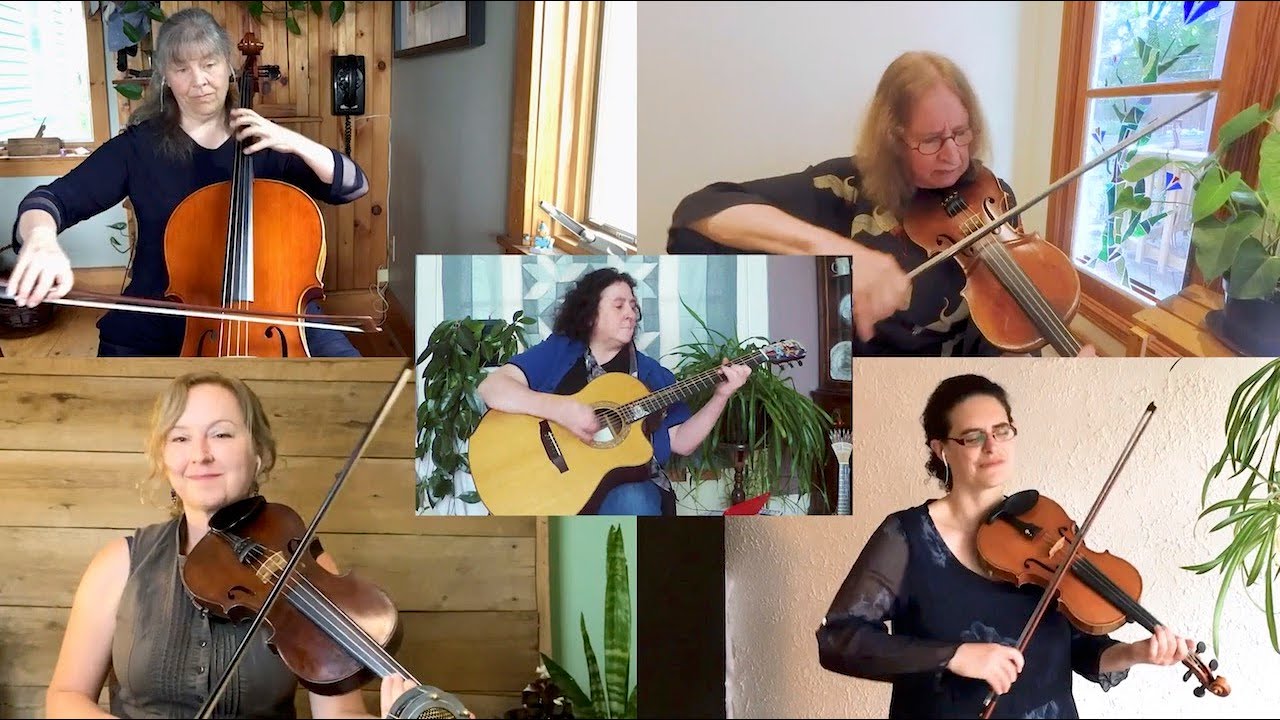
Canadian folk music group Portage perform Aug. 3, 2024 in Cambridge ON. The members of Portage include: Anne Lederman, Erynn Marshall, Laura Risk, Christina Smith and Jean Hewson. Photo from Portage.
A new group of Canadian folk musicians plans a show in Cambridge on Aug. 3, 2024, at Wesley United Church.
I’ll be the emcee for the show by Portage. I look forward to seeing you in the audience. Tickets cost $20.
For me, it’s a chance to reflect on the annual Mill Race Festival of Traditional Folk Music, that used to be staged downtown on the Civic Holiday Weekend. I always had great fun volunteering on the board planning the event, and introducing musicians on the show weekend.
And on Sunday, Aug. 4, 2024, folk trio Tea for Three plays at Mill Race Park – where the Mill Race festival began in 1992. The trio include Paul Morris, Gwen Potter & Brad McEwen, who are also members of the band Tethera. Brad was the founder and musical director of the festival. Tea for Three performs at 7 p.m., after Emi-Lee Small at 6:30 p.m.
Last Mill Race Festival staged in 2018
The festival’s last year was in 2018, after 26 years. There’s no plan to revive the festival. Instead, the volunteer folk society is now helping other groups host music events.
At Wesley, Portage members will showcase their skills as fiddlers, multi-instrumentalists, and singers performing old and new music in a collective artistic adventure.
Their new self-named recording Portage, features ten arrangements of high-energy fiddling from many traditions combining vocals, guitar, cello, piano, bones, feet, and more.
The members of Portage are Anne Lederman, Erynn Marshall, Laura Risk, Christina Smith and Jean Hewson.
The Cambridge event is organized by Wesley United Church and Mill Race Folk Traditions.
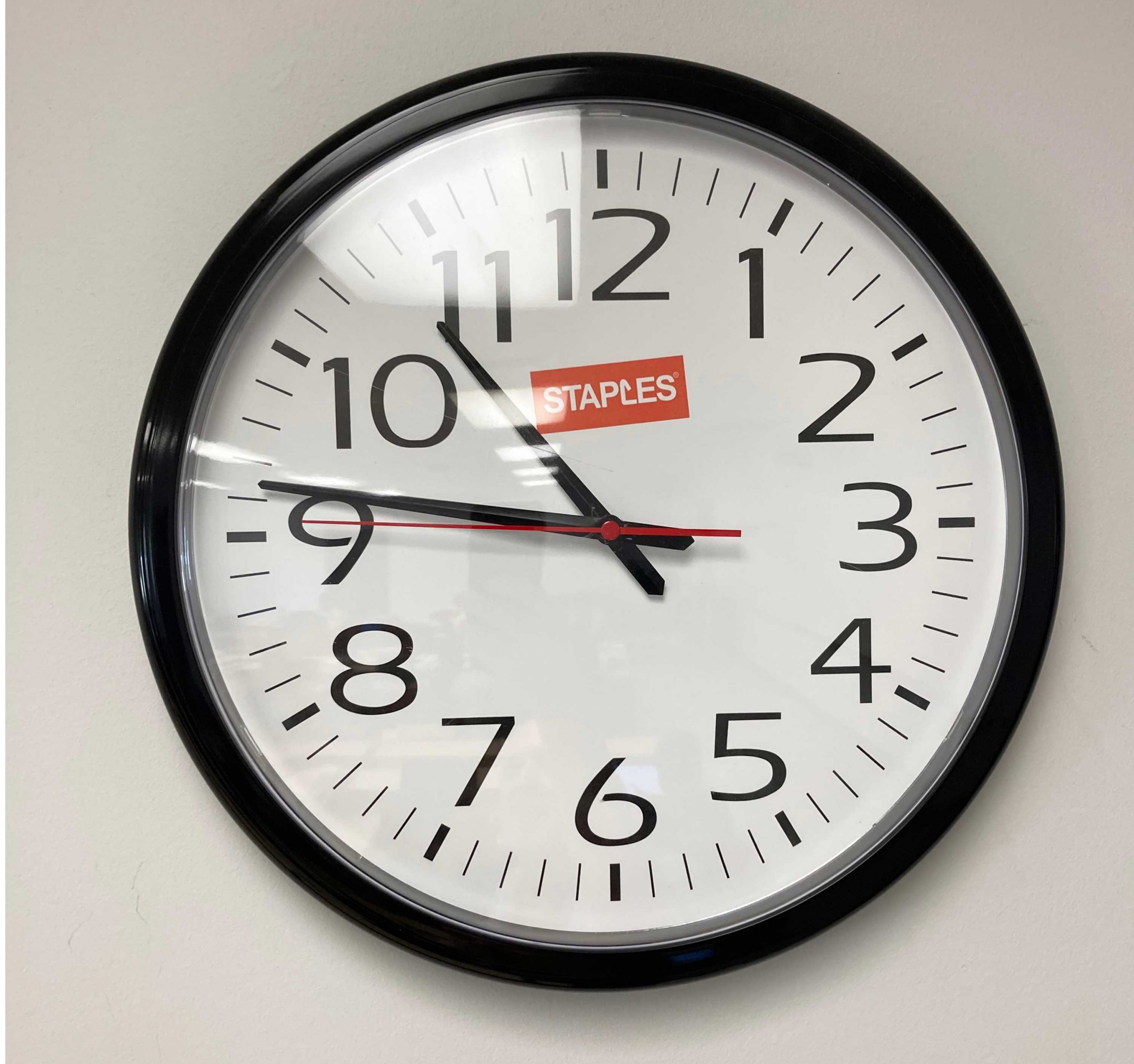
The room 235 classroom clock never changed during the Covid-19 lockdown. Photo by Kevin Swayze
The clock on the wall showed 14 minutes to 11.
That’s what I remember from March 12, 2020.
That was the last day I stood in classroom 235 at Conestoga College in Kitchener. I said goodbye to my business communication students, complained about the broken clock and walked out the door.
My first winter teaching contract was over. I was looking ahead to returning to that room in May.
The world had other plans.
On Friday the 13th, 2020, Ontario Premier Doug Ford started talking about how Ontario would respond to something called COVID-19. Four days later, the province was locked down. Everyone was ordered to stay home. My wife and oldest daughter started sewing surgical masks from cotton fabric originally planned for wall hangings and quilts.
The first time I went for groceries wearing a floral green mask, I snatched the last two packages of toilet paper from the shelves of my closest Food Basics store.
Coveted Covid toilet paper in March 2020. By Kevin Swayze
And stood in line for an hour to get to the checkout. It felt like I was in a store in Florida under a Hurricane watch.
Lockdown learning
I did return to teaching in May 2020. Call it lockdown learning: My classroom reopened on Zoom. Thirty international students and me managed the stuttering “high-speed internet.” I was in my basement. They were jammed in little apartments and basements across Waterloo Region.
Nobody turned their cameras on. Little black squares for students. I was teaching into the abyss.
I was learning how to communicate all over again. I was learning and modelling business communication in the new online world.
I thought I was an effective communicator before. Now, I was a drill sergeant in a supportive communications boot camp. No yelling. No pushups. No 20-mile marches.
I poured on patience and empathy. Laughed a lot. Commiserated. Modelled effective communication tactics, like active listening and open questions. I offered what felt like decades-long pauses after questions, offering addled students space to reply through audio distortion.
How much impact?
I now wonder how much difference my efforts actually made, considering how unfriendly zoom is for inter-personal communication.
My personal dislike of video communications came through, as my anxiety increased. I can only wonder what three hours of a talking head filling the screen for students did to their stress and anxiety.
Researchers tracked brain activity when two people interacted, in person and online. The results didn’t surprise me: it’s harder to connect with someone online.
“In this study we find that the social systems of the human brain are more active during real live in-person encounters than on Zoom,” said Hirsch, the Elizabeth Mears and House Jameson Professor of Psychiatry, professor of comparative medicine and neuroscience, and senior author of the study.
“Zoom appears to be an impoverished social communication system relative to in-person conditions.”
When I’m teaching, it’s all about inter-personal communication. Without trusting me, socially, I doubt students – or anyone – will consider what I share.
My communication style
After I completed a Toastmasters International communication style survey, it was no surprise how I responded to online teaching stress. Here are my results, all scored out of 10.
9 – Supportive – patient, cooperative, and sympathetic. Active listening. Calm and steady – I don’t like tension! (There’s also anegative aspect to the score: I am sometimes indecisive).
2 – Analytical – cautious, precise, and disciplined. Diplomatic. (negative: I can be a perfectionist).
1 – Initiating – sociable and enthusiastic. Easy communication. Respond to praise (Negative aspects: I tend to talk more than listen).
0 – Direct – results-oriented, focused and competitive (Negative aspects: impatient and demanding)
Confirmed: I am a supportive communicator.
I don’t push technology to solve problems. I rarely order people around.
Instead of struggling with my class PowerPoint, I tend to talk more about prefer talking Poutine and burritos to keep student attention. Sharing favourite recipes!
I ask questions. I want to hear about a student’s life experience before logging into the classroom.
Minimal lectures. I encourage students to share their knowledge.
Their success is my success.
Online connections
Over six Covid semesters, students respond out of the ether, from overcrowded apartments, or using iPhones while riding a bus home from work on a winter night.
Even during the most stressful online days of Covid, students gave me more than 90 percent positive results in school-wide class experience surveys.
And I thank them all for teaching me how to improve.
My new normal – teaching in real and virtual – is all about doubling down on collaboration and conversation.
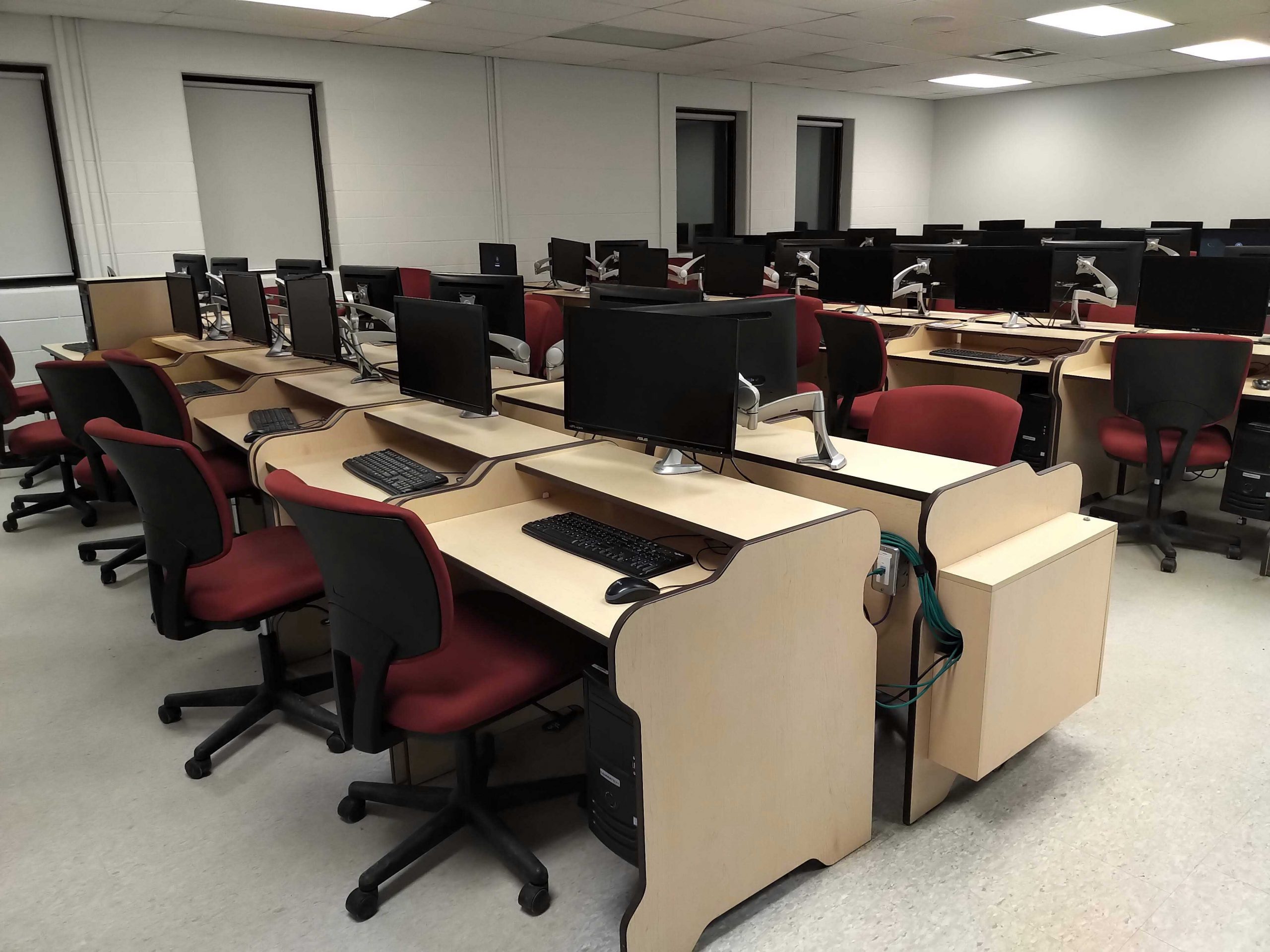
Classroom 235 looked pretty well the same before Covid lockdown, as after. By Kevin Swayze
I was zooming again in September 2022, but one of my three classes was in person. In the same classroom, I walked out of two and half years ago. Weird. Very Weird.
The clock on the classroom wall still showed 14 minutes to 11 as the students walk in and I greet them wearing a paper surgical mask.
A lot happened in the 914 days since I last walked back into room 235 – and a lot stayed the same.
This post is based on a speech presented – online – at Cambridge Toastmasters Sept. 15, 2022.
Contains information related to marketing campaigns of the user. These are shared with Google AdWords / Google Ads when the Google Ads and Google Analytics accounts are linked together.
90 days
__utma
ID used to identify users and sessions
2 years after last activity
__utmt
Used to monitor number of Google Analytics server requests
10 minutes
__utmb
Used to distinguish new sessions and visits. This cookie is set when the GA.js javascript library is loaded and there is no existing __utmb cookie. The cookie is updated every time data is sent to the Google Analytics server.
30 minutes after last activity
__utmc
Used only with old Urchin versions of Google Analytics and not with GA.js. Was used to distinguish between new sessions and visits at the end of a session.
End of session (browser)
__utmz
Contains information about the traffic source or campaign that directed user to the website. The cookie is set when the GA.js javascript is loaded and updated when data is sent to the Google Anaytics server
6 months after last activity
__utmv
Contains custom information set by the web developer via the _setCustomVar method in Google Analytics. This cookie is updated every time new data is sent to the Google Analytics server.
2 years after last activity
__utmx
Used to determine whether a user is included in an A / B or Multivariate test.
18 months
_ga
ID used to identify users
2 years
_gali
Used by Google Analytics to determine which links on a page are being clicked
30 seconds
_ga_
ID used to identify users
2 years
_gid
ID used to identify users for 24 hours after last activity
24 hours
_gat
Used to monitor number of Google Analytics server requests when using Google Tag Manager
1 minute
Jetpack's built-in visitor analytics. It records page views, referring sites, search terms, and outbound link clicks, and also carries the shared visitor-tracking library used by Jetpack Instant Search and WooCommerce Analytics.







You must be logged in to post a comment.