
Remembrance Day at Galt Cenotaph November 11, 2023


Halloween is history and it’s time to start thinking about the city’s rake-to-the-curb leaf collection, set to start Nov. 8 and continue through Dec. 6, 2023 in Cambridge.
City crews will collect the leaves for composting, once section of the city at a time. Look for an interactive online map at this link, under the “Cambridge Leaf Collection Program” drop-down section.
Here’s what West Galt residents need to know about leaf collection:

The city encourages property owners to leave leaves in place over the winter, providing habitat for pollinator like bees and butterflies.
Cambridge is designated a Canadian Bee City, for local efforts to protect pollinator habitat.
Or you can rake, mulch and compost, to keep the nutrients on your property for your 2024 growing season.
Region of Waterloo curbside yard waste collection continues for two more weeks in 2023: Nov. 6 and Nov. 20.

You may also take your bagged leaves and yard waste to the Cambridge Waste Management Centre, 201 Savage Dr., Monday to Saturday between 7 a.m. and 6 p.m. Fees may apply.
Here’s the city’s leaf collection tips video:
Updated November 5, 2023
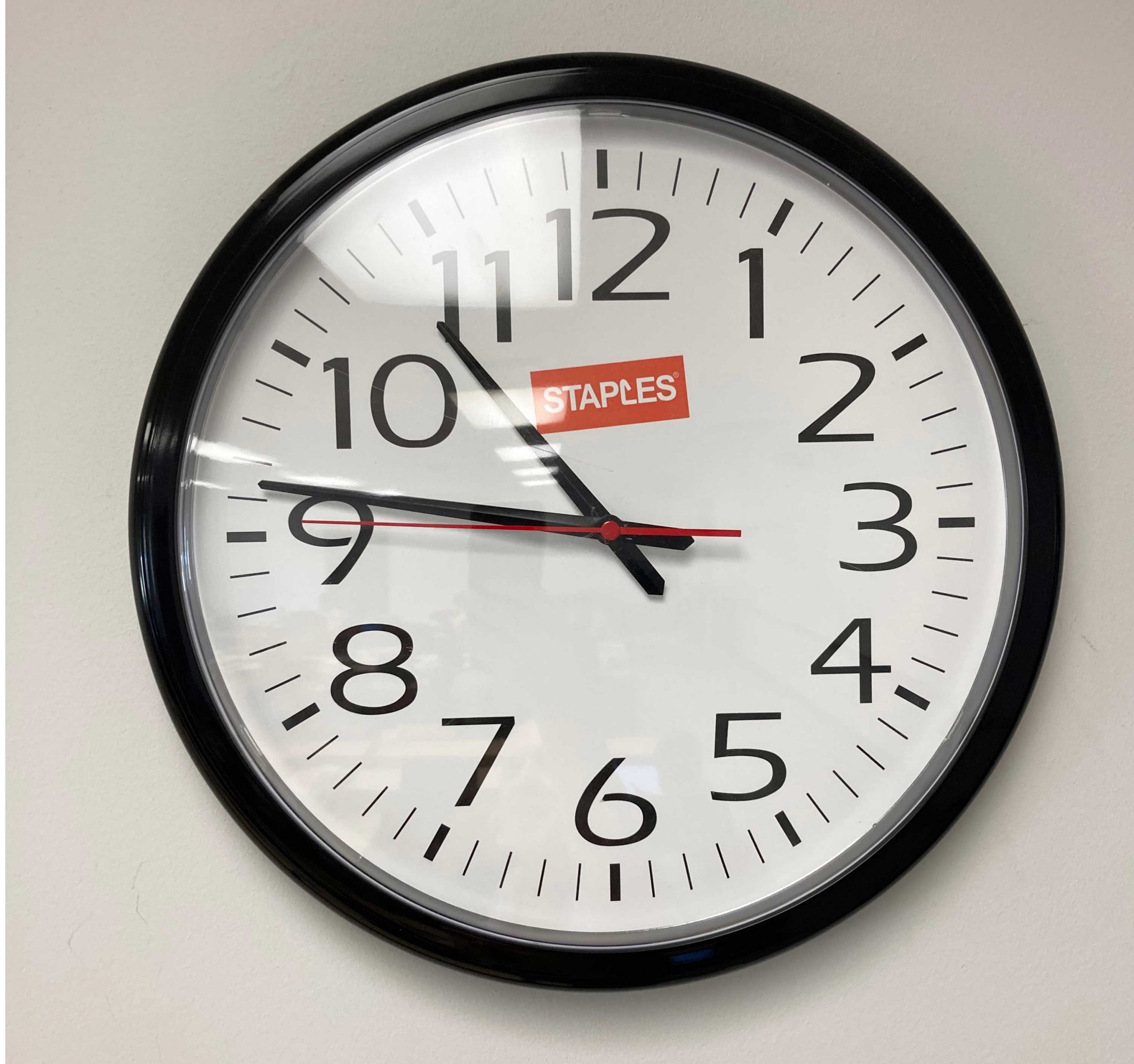
The clock on the wall showed 14 minutes to 11.
That’s what I remember from March 12, 2020.
That was the last day I stood in classroom 235 at Conestoga College in Kitchener. I said goodbye to my business communication students, complained about the broken clock and walked out the door.
My first winter teaching contract was over. I was looking ahead to returning to that room in May.
The world had other plans.
On Friday the 13th, 2020, Ontario Premier Doug Ford started talking about how Ontario would respond to something called COVID-19. Four days later, the province was locked down. Everyone was ordered to stay home. My wife and oldest daughter started sewing surgical masks from cotton fabric originally planned for wall hangings and quilts.
The first time I went for groceries wearing a floral green mask, I snatched the last two packages of toilet paper from the shelves of my closest Food Basics store.

And stood in line for an hour to get to the checkout. It felt like I was in a store in Florida under a Hurricane watch.
I did return to teaching in May 2020. Call it lockdown learning: My classroom reopened on Zoom. Thirty international students and me managed the stuttering “high-speed internet.” I was in my basement. They were jammed in little apartments and basements across Waterloo Region.
Nobody turned their cameras on. Little black squares for students. I was teaching into the abyss.
I was learning how to communicate all over again. I was learning and modelling business communication in the new online world.
I thought I was an effective communicator before. Now, I was a drill sergeant in a supportive communications boot camp. No yelling. No pushups. No 20-mile marches.
I poured on patience and empathy. Laughed a lot. Commiserated. Modelled effective communication tactics, like active listening and open questions. I offered what felt like decades-long pauses after questions, offering addled students space to reply through audio distortion.
I now wonder how much difference my efforts actually made, considering how unfriendly zoom is for inter-personal communication.
My personal dislike of video communications came through, as my anxiety increased. I can only wonder what three hours of a talking head filling the screen for students did to their stress and anxiety.
Now, after I’m back to teaching in-person classes all the time, I see more research into the profound differences between in-person and online communication.
Researchers tracked brain activity when two people interacted, in person and online. The results didn’t surprise me: it’s harder to connect with someone online.
“In this study we find that the social systems of the human brain are more active during real live in-person encounters than on Zoom,” said Hirsch, the Elizabeth Mears and House Jameson Professor of Psychiatry, professor of comparative medicine and neuroscience, and senior author of the study.
“Zoom appears to be an impoverished social communication system relative to in-person conditions.”
When I’m teaching, it’s all about inter-personal communication. Without trusting me, socially, I doubt students – or anyone – will consider what I share.
After I completed a Toastmasters International communication style survey, it was no surprise how I responded to online teaching stress. Here are my results, all scored out of 10.
Confirmed: I am a supportive communicator.
I don’t push technology to solve problems. I rarely order people around.
Instead of struggling with my class PowerPoint, I tend to talk more about prefer talking Poutine and burritos to keep student attention. Sharing favourite recipes!
I ask questions. I want to hear about a student’s life experience before logging into the classroom.
Minimal lectures. I encourage students to share their knowledge.
Their success is my success.
Over six Covid semesters, students respond out of the ether, from overcrowded apartments, or using iPhones while riding a bus home from work on a winter night.
Even during the most stressful online days of Covid, students gave me more than 90 percent positive results in school-wide class experience surveys.
And I thank them all for teaching me how to improve.
My new normal – teaching in real and virtual – is all about doubling down on collaboration and conversation.
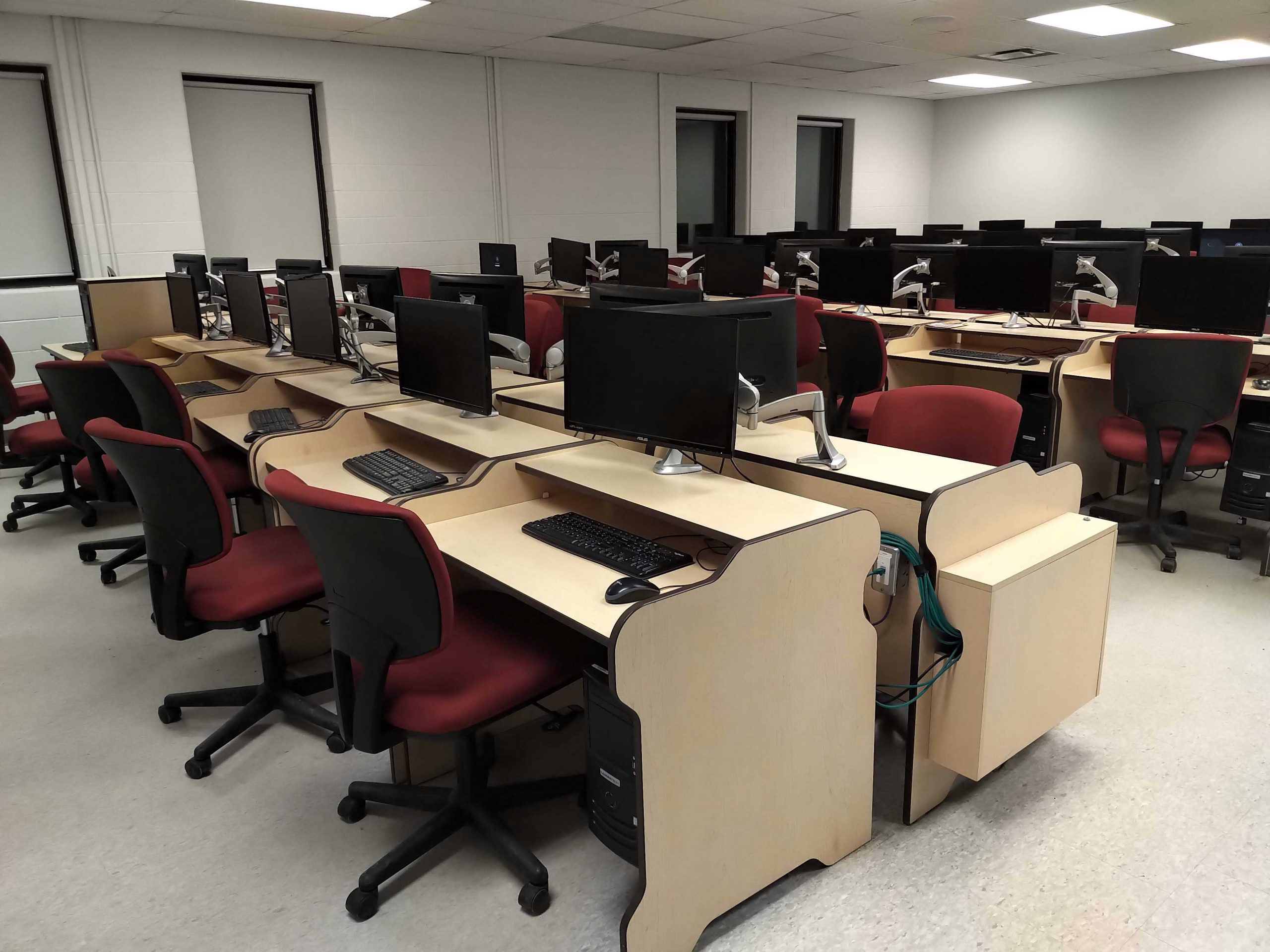
I was zooming again in September 2022, but one of my three classes was in person. In the same classroom, I walked out of two and half years ago. Weird. Very Weird.
The clock on the classroom wall still showed 14 minutes to 11 as the students walk in and I greet them wearing a paper surgical mask.
A lot happened in the 914 days since I last walked back into room 235 – and a lot stayed the same.
This post is based on a speech presented – online – at Cambridge Toastmasters Sept. 15, 2022.

It looks like the reconstruction of the Dickson Park grandstand will be done by winter 2023.
Work involves a top-to-bottom restoration of the 104-year-old historically designated structure.
Work started in late July 2023 on the nearly $1.3 million project, funded by the City of Cambridge and Ottawa.
Work involves repairs to the flat roof, replacing the wooden bench seating and concrete foundation, and new access step repairs.
To passersby, reconstruction of the Dickson Park grandstand looks like the time winter weather will do it arrives in December 2023.
On Sat., Nov. 4, 2023, painters worked in the unseasonably warm 9 C weather, working under the roof from a cherry picker lift.


Dickson Park was created in 1871 when William Dickson Jr. donated 21 acres of land to the Town of Galt.
The original grandstand was built in 1891 or 1892, says Jim Quantrell, in his history book Time Frames, from the City of Cambridge Archives.
The grandstand was doubled in size around 1904, as the Galt Horse Show was a big annual event in Dickson Park at the time.
On Jan. 8, 1916, the grandstand burned to the ground. Three boys later admitted to setting the fire.
Today’s grandstand in Dickson Park was built in 1919. Today, it is a historically designated structure under the Ontario Heritage Act.


I do not envy my international students, as they face an insult to their brains and bodies this weekend from the end of Daylight Saving Time.
It messes changes with Canadians, too, both in spring and fall. The one-hour time adjustment addles people for up to a week.
I teach Technical Communications at Conestoga College in Kitchener, Ontario, Canada. I’ve already heard some of my international students ask: so why do we do it? I heard the same kind of comments in past semesters from students from Cambridge, Waterloo, and Brantford.
Daylight Saving Time has a complicated, convoluted history in Canada. There is a consensus, mostly, of few benefits and many downsides of the bi-annual switching between Daylight Saving Time and Standard Time.
I expect grumpy, sleepy, and disoriented students joining me in class at 8 a.m. on Monday, November 6, 2023.
Thanks to that one-hour switch from Daylight to Standard at 2 a.m. Sunday, November 5. I’ll be grumpy, sleepy, and disoriented, too. Moreso than normal, I mean.
I’m always mentally foggy after the “fall back” time change, even after that bonus hour of sleep. I will have to remember to change the clocks on my microwave oven and coffee maker. And I won’t want to go to sleep at my normal bedtime Sunday night.
But it won’t be as bumpy as after the time change on March 10, 2024, when Daylight Saving Time returns for summer. That’s when we’ll all likely be more addled by the loss of an hour of sleep time that night, in return for more sunshine in summer evenings.
I always oversleep after the “spring ahead” clock change. And I have to change the clocks on my kitchen appliances back again.
When you wake up disoriented after the time change, check the official time on Canada’s atomic-powered clocks.
Researchers talk about “social jetlag” due to the time changes. It can prompt people to stay inside and eat more in the winter when it’s healthier to be outside and active in the fewer hours of available sunshine.
Some research suggests an increased risk of heart attacks, strokes, immune-related, digestive system problems, and injuries after the spring and fall time switches.
Time changes also disrupt sleep and mental health.
Daylight Saving Time was first implemented in Canadian town in 1908 in Ontario, then a few more in 1914 in Saskatchewan.
The idea was adopted by Germany, France, and the United Kingdom during the First World War. It was intended to maximize work hours before sunset, minimizing the need for artificial lighting.
The idea spread across Europe, back to North America, and eventually to a peak of 143 countries around the world trying it, at least for a while. Today, the tally is down to 71, with more countries canceling each year.
In 2023, it’s 111 years and counting for Daylight Savings in Canada. Except, not in the Yukon Territory, most of Saskatchewan, and some parts of parts of British Columbia and Quebec.
The push to end Daylight Saving Time continues across the rest of Canada.
The Province of Ontario passed legislation to end it, as soon as neighbouring Quebec province New York State does. New York’s Daylight Saving plans depend on proposed legislation at the United States federal government.
The idea of year-round summer Daylight time is part-way through U.S. government approvals in 2022, with hopes of becoming law in 2023.
But the process is stalled in the U.S. and Daylight Saving Time remains in Canada.
You must be logged in to post a comment.